Troubling phase for Architectural Trust
Published 5:30 am Sunday, January 25, 2026
Promising developments in our cultural sector seem to be everywhere these days. Note the impressive national anthem performance of Meridian native Jamal Roberts at college football’s title game, new responsibilities for talented MSU Riley Center executive Morgan Dudley, restoration work at Highland Park, and plans for the MAX museum’s spring Sipp & Savor mega-festival.
But it’s not all good news.
The Meridian Architectural Trust, launched years ago with big aspirations for addressing a glaring civic weak spot, is floundering, uncertain about how to move forward. The local preservation advocacy front has lost momentum.
The MAT’s 2022 “Crossroads” conference at the Riley Center, near a beautifully restored opera house (after this performance-venue jewel was shuttered for several decades), stirred excitement and good will, with visiting historic preservation experts offering lots of guidance. An early website post by one of the MAT’s founders, Sarah Johnson, said, “We sense a reawakening of pride in Meridian, and a determination to revitalize the place we call home.”
But Johnson stepped down from a leadership role about a year ago. Plans for launching a demonstration restoration project were put on hold amid financial and liability concerns. Remaining MAT board members haven’t figured out whether or how to move forward with a Meridian oral history project that would connect personal stories to significant buildings.
There are no specific plans for sustaining MAT “lunch and learn” educational events that were well received in the past.
“We’ve kind of just put everything down for a minute,” said MAT board member Mark Davis, an architect. He predicted that MAT’s future efforts will be on the modest side. “I think it will look a bit more like a garden club, unfortunately.”
Board member Richelle Putnam, a writer and musician who advanced planning for oral histories, said “unstable” board leadership, along with challenges in applying for needed grants, have contributed to a troubling pause. “We just really don’t have a strong enough board to take it to the next level.”
Limited time and resources always threaten to slow exciting work by our creative nonprofit organizations. But we must find sustainable ways of advancing MAT’s agenda because preservation issues impact our community’s identity and quality of life. The work of MAT, or some replacement entity, reaches far beyond a garden-variety, garden-club agenda.
Not every old building can be saved, but Meridian is blessed to have hundreds that can, with resulting benefits for property values, neighborhood stabilization, job creation (renovating, painting, etc.), and cultural tourism. We need more education, stronger code enforcement, outreach to out-of-town allies with resources. That’s where tireless work by MAT, or some replacement entity, comes in.
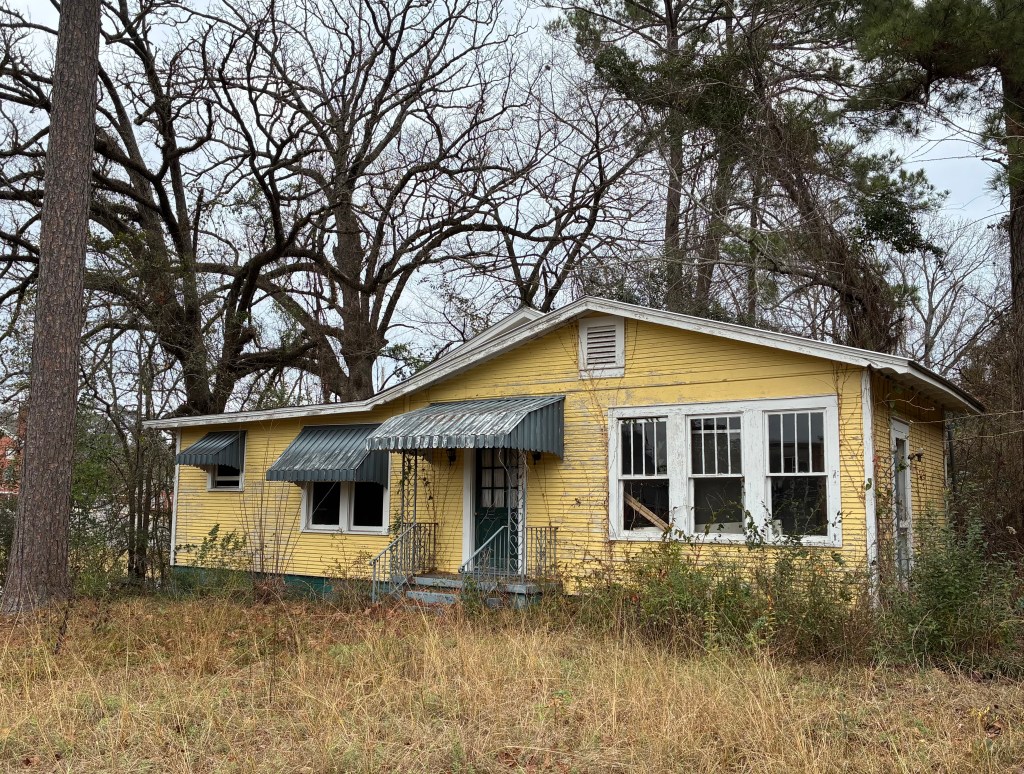
Many of the best prospects for preservation seem to be hiding in plain sight. This includes modest-scale homes in neighborhoods across our city that simply suffer from neglect or abandonment. I’ll offer one illustration.
In the neighborhood of my childhood, on Poplar Springs Drive near the corner of 40th Street, sits a handsome old cottage—painted yellow with white trim—that looks abandoned, its yard overgrown. My wife and I have speculated that, with renovations, this could be a fine home for an individual or family. But there’s more: This house has a distinctive history that few are aware of.
City directories and census records suggest this property once was home to Algene Key and wife Evelyn. Al Key and brother Fred, as brash young aviators, the “Flying Keys,” set a flight endurance record in 1935 that helped put Meridian on the map. Al Key later served as a World War II bomber pilot and two terms as Meridian’s mayor.
This home is deserving of full restoration, devoted new owners (who could attend a Methodist or Baptist church a short walk away, if they choose), and, if Key’s association is verified, a classy historical marker.
A fine outcome for this and other long-neglected properties would be a point of civic pride. We can do better, and we need a strong MAT.
Coleman Warner is a journalist and cultural historian, and can be contacted at legacypress.warner@gmail.com.